Showing 1–16 of 17 results
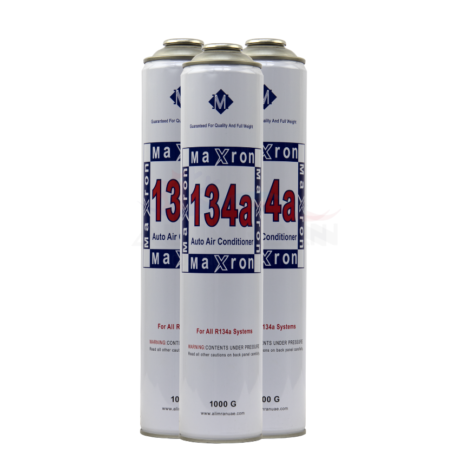
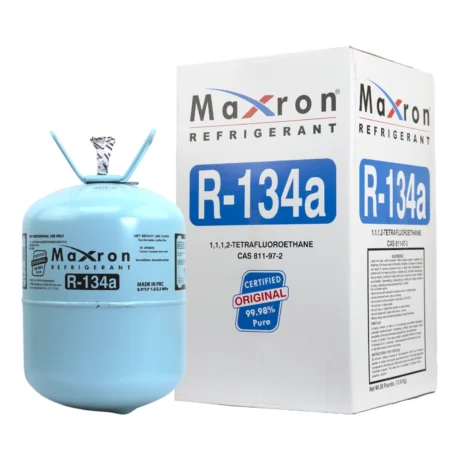
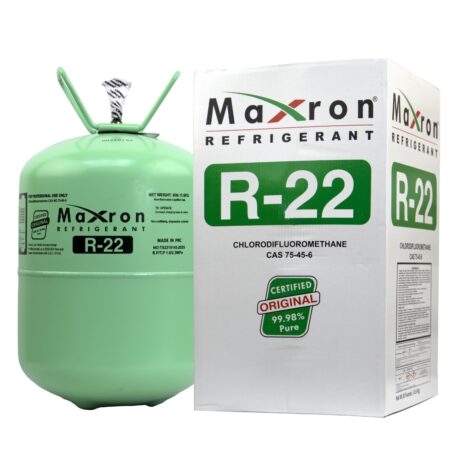
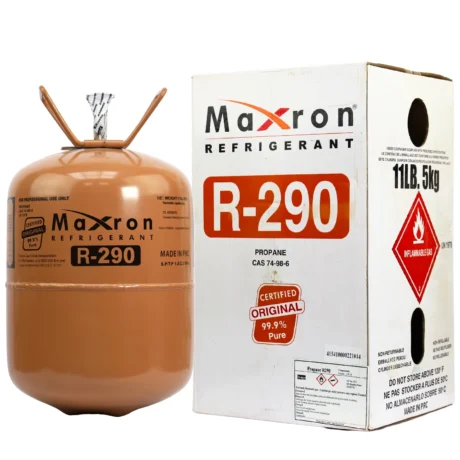
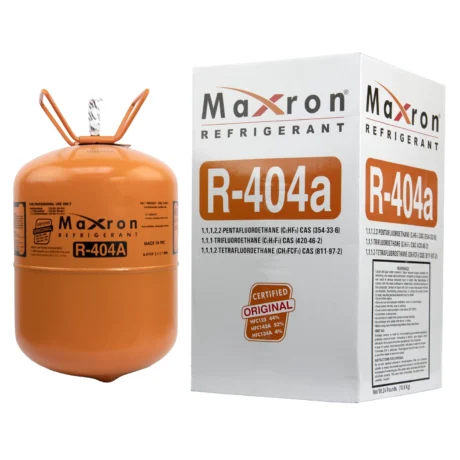
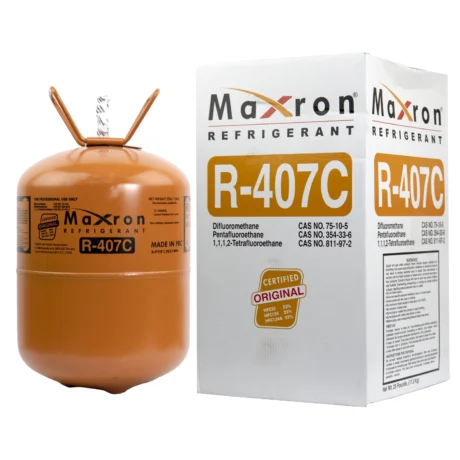
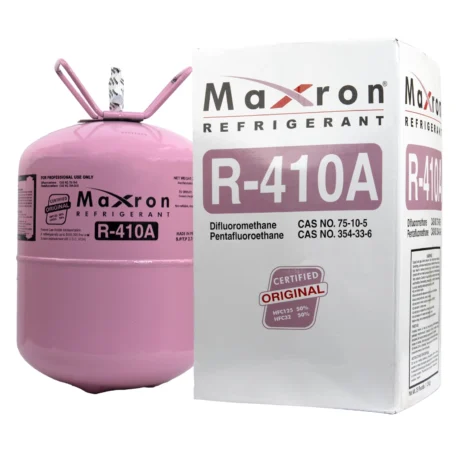
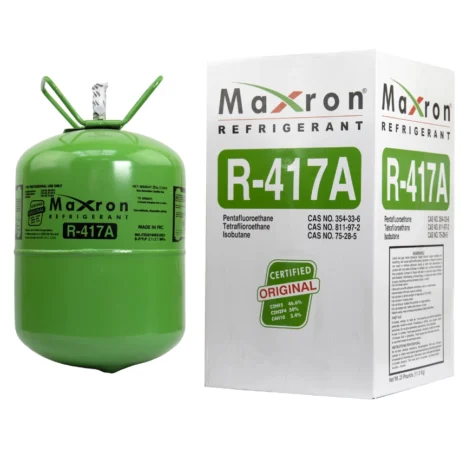
Principal Supplier of MAXRON Refrigerant Gases and Low GWP Solutions in UAE
The UAE’s massive demand for cooling necessitates a strategic partnership between suppliers and service providers, ensuring consistent access to certified, high-purity refrigerants that maximize system performance under extreme ambient conditions. MAXRON Refrigerant Gases represent a technically robust portfolio, covering the full spectrum of required fluids—from essential service gases like R-134a to next-generation, low-GWP solutions like R-32 and R-290.
Al Waleed A/C Spare Parts Dubai is the Principal Strategic Supplier for the complete range of MAXRON Refrigerant Gases in the UAE. We provide certified pure refrigerants in all industrial and commercial volumes, enabling service fleets, MEP contractors, and facility managers across Dubai and Abu Dhabi to meet technical specifications while navigating the complexity of environmental regulatory changes.
I. The MAXRON Portfolio: Technical & Environmental Compliance
Our stock is categorized to address legacy systems, current standards, and the future transition toward lower Global Warming Potential (GWP) fluids mandated by environmental responsibility.
| Refrigerant Type | Chemical Class & ASHRAE Safety | GWP Value | Key Lubricant Requirement | Primary UAE Application Focus |
| R-134a | HFC, A1 (Non-flammable) | 1,430 (High) | POE Oil or PAG (Auto AC) | Automotive, Water Chillers, Medium-Temp Refrigeration. |
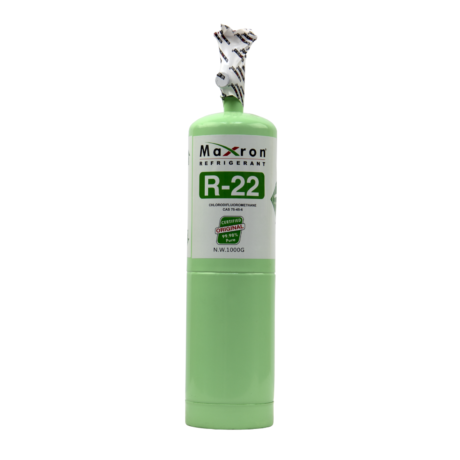
| R-22 | HCFC, A1 (Non-flammable) | 1,810 (Very High) | Mineral Oil, AB Oil | Legacy AC Systems (Servicing Only). |
| R-32 | HFC, A2L (Slightly Flammable) | 675 (Significantly Lower) | POE Oil | New Split AC and Heat Pump Installations (R-410A Alternative). |
| R-290 | Hydrocarbon (HC), A3 (Highly Flammable) | =< 3 (Extremely Low) | Mineral Oil, AB Oil | Domestic/Small Commercial Refrigeration (Charge Limited Systems). |
II. Low GWP Transition: R-32 and R-290 Strategy
The future of HVAC in the UAE is intrinsically linked to energy efficiency and a reduced environmental footprint. MAXRON offers two key solutions in this transition:
-
MAXRON R-32: With a GWP of 675, R-32 represents a massive step down from the common R-410A (GWP of 2,088). Its high volumetric capacity means less refrigerant mass is needed for the same cooling output. We stock R-32 for modern, high-SEER (Seasonal Energy Efficiency Ratio) residential and commercial split units.
-
MAXRON R-290 (Propane): Classified as a natural refrigerant with an Ultra-Low GWP (=< 3). R-290 offers exceptional thermodynamic performance (15-35 percent energy savings) but, as an A3 (Highly Flammable) fluid, requires strict adherence to charge limits and handling by fully certified technicians, making it ideal for small, specialized commercial refrigeration.
III. Logistics and Sourcing for MAXRON Refrigerant Gas Price in UAE
The logistics of procuring high-pressure gases must be streamlined for immediate delivery across the fast-moving UAE service sector.
Al Waleed A/C Spare Parts Dubai provides the best and most transparent MAXRON Refrigerant Gas price in UAE wholesale, catering to all industrial requirements. We stock MAXRON in every available format to match your project needs:
| Packaging Type | Typical Contents | Target User Segment | Key Logistical Advantage |
| Cans (Slices) | 320g, 1kg | Field Service Technicians (Small top-ups, specialized systems) | Portability and precision charging by mass. |
| Disposable Cylinders | 3.4kg, 13.6kg | Standard Residential/Commercial Service Fleet | Economical for mid-volume repairs; avoids cylinder tracking costs. |
| Refillable Cylinders | 12kg, 60kg | Large Contractors, Workshop Recycling Centers | Long-term use; cost-effective for high-turnover gas. |
| Industrial Transport | 950kg (Ton Tank), 20,000kg (ISO Tanker) | Chiller Plant Operators, Bulk Distributors | Lowest per-kilogram cost for major infrastructure projects. |
IV. Why Choose Al Waleed A/C Spare Parts Dubai?
We bridge the gap between regulatory demands, safety protocols, and commercial necessity in the UAE.
-
Safety Compliance for A2L/A3: We provide the correct safety information and stock for R-32 and R-290, ensuring our clients adhere to all safety classifications for mildly and highly flammable refrigerants, a critical risk factor in the service workflow.
-
Oil Compatibility Verification: We clearly delineate the necessary lubricant for each MAXRON product (POE for HFCs, Mineral/AB for HCFCs/HCs), preventing technician error that leads to catastrophic compressor failure.
-
Guaranteed Purity: MAXRON refrigerants are sourced with certified purity, preventing the introduction of moisture and non-condensable gases (NCGs) that cause high head pressures and reduced cooling capacity during the extreme UAE summer.
-
Complete Volume Flexibility: Our unmatched stock depth—from tiny 320g cans to massive ISO tankers—allows us to support the smallest contractor up to the largest facility management firm instantly and economically.
Technical FAQ for MAXRON Refrigerant Gases
Q: Why is R-22 still listed for sale if it has a high Ozone Depletion Potential (ODP)?
A: R-22 is still available because the environmental regulations allow for its continued use in servicing and maintaining existing equipment (grandfathered units). New R-22 equipment production and import are restricted, but the refrigerant is necessary to keep the vast installed base operational.
Q: What specific safety equipment is required to handle MAXRON R-290 (Propane) in the field?
A: Due to its A3 (Highly Flammable) classification, technicians must use flame-resistant gloves, ensure zero ignition sources (no smoking, no open flame), and utilize explosion-proof recovery and charging equipment when handling R-290.
Q: How does the GWP of R-32 (675) compare to the phase-out target for refrigerants in new systems?
A: R-32 offers a substantial reduction from previous gases. Although its GWP is above the long-term target of less than 150, its high efficiency and volumetric capacity make it the current leading transitional gas for split AC, demonstrating immediate environmental and energy savings.
Q: Why is Poly Alkylene Glycol (PAG) oil specified only for R-134a in automotive AC, not residential systems?
A: PAG oil is specifically designed for the rubber components and conditions found in automotive (MAC) systems. Residential and commercial R-134a systems require POE oil, as PAG is highly aggressive toward certain plastics and materials found in larger static HVAC systems.
Q: What is the risk of accidentally mixing a small amount of R-22 into an R-410a system?
A: Mixing R-22 with R-410a creates an incompatible mixture that can damage the system. R-22 oil (Mineral) is incompatible with R-410a, and the resulting non-azeotropic mixture will operate with improper pressures and temperatures, leading to potential motor burnout.
Q: How does the high ambient heat in Dubai affect the required refrigerant charge weight?
A: High ambient heat increases the load, but the refrigerant charge mass (weight) remains fixed according to the manufacturer’s plate. Technicians must verify the charge by achieving the correct subcooling and superheat values against the P/T chart, which accounts for the high condensing temperature.
Q: What is the advantage of using a Ton Tank (950kg) format for a large facility manager in the UAE?
A: The Ton Tank offers a logistical advantage. It is a single, large container that reduces handling fees and provides a significant volume of gas at the lowest unit cost, ideal for centralizing inventory and servicing a high volume of chiller units on a single site.
Q: What happens if moisture is introduced into a system charged with R-134a and POE oil?
A: The highly hygroscopic POE oil readily absorbs the moisture. When combined with heat from the compressor, this moisture forms corrosive hydrofluoric acid, which rapidly degrades the motor windings and internal components, leading to eventual compressor failure.
Q: When servicing an R-290 domestic refrigerator, why is the refrigerant charge so small (e.g., less than 150 grams)?
A: The charge is limited to a small amount (typically under 150g) as a safety measure due to the high flammability (A3) of Propane. This small quantity minimizes the amount of flammable gas that could be released in case of a leak, reducing the risk of fire or explosion.
Q: What does the term “non-flammable” (A1 classification) technically mean for R-134a in a system fire scenario?
A: The A1 classification means that R-134a will not sustain combustion when mixed with air at 1 atmosphere pressure and 18 degrees C. However, under extreme heat (like a fire), R-134a can decompose, producing highly toxic byproducts, necessitating external ventilation.