Showing all 2 results
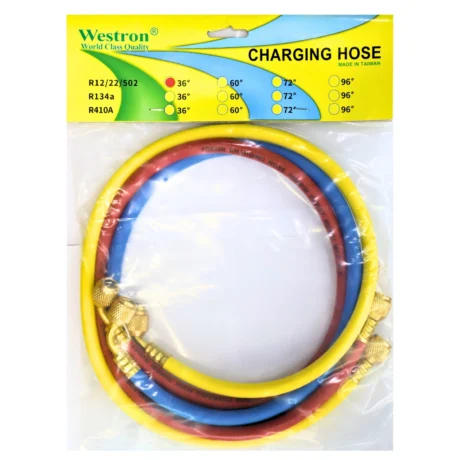
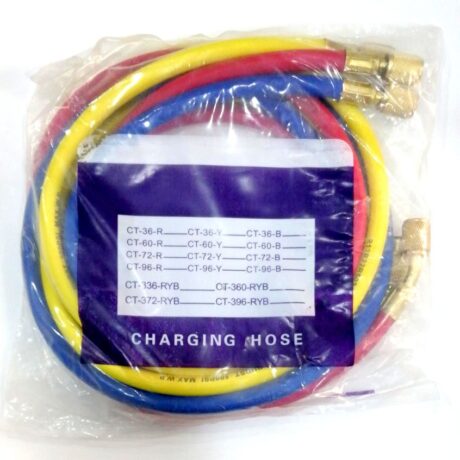
High-Pressure Refrigerant Charging Hoses: Leading Supplier in UAE for Safety and Precision Service – Al Waleed A/C Spare Parts Dubai
In the high-stakes world of UAE HVAC, the integrity of a refrigerant charging hose is paramount to both the system’s efficiency and the technician’s safety. Given the prevalence of high-pressure refrigerants like R410A and R32 in modern cooling systems across Dubai, a standard hose is simply insufficient. A failure in a charging hose under extreme pressure and high ambient temperature conditions poses a serious risk of injury and results in costly, environmentally non-compliant refrigerant release. Al Waleed A/C Spare Parts Dubai supplies a professional range of refrigerant charging hose assemblies, often including compact ball valves, engineered with multi-layered, reinforced construction to meet or exceed the demanding SAE J2196 and SAE J2888 standards for safe, leak-free service.
Technical Specifications and Usage of Charging Hoses
The refrigerant charging hose is the flexible conduit connecting the HVAC gauge manifold set to the system’s service ports and the refrigerant cylinder (or recovery unit). The hoses are color-coded (Red for High side, Blue for Low side, Yellow for Utility/Charge/Vacuum) and rated for different pressures.
Key Technical Features:
-
High Working Pressure: Hoses are required to handle pressures up to 800 PSI (pounds per square inch) working pressure, with a minimum burst pressure of 4000 PSI to ensure safety margin, particularly vital when servicing R410A Manifold Gauge setups.
-
Fittings and Compatibility: Standard connections are 1/4 inch SAE female flare fittings, often with a 45 degree bend on one end for convenient connection to Schrader valves. For R410A systems, the standard port size is 5/16 inch SAE, requiring hoses with specialized 5/16 inch fittings or adapters (e.g., 1/4 inch to 5/16 inch).
-
Valve Core Depressor: The fittings include a valve core depressor pin to engage the service port valve, ensuring refrigerant flow into or out of the system.
-
Ball Valve Integration: Many professional charging hoses feature integrated compact ball valves near the end of the hose. This valve discharge conditioning feature allows the technician to quickly shut off refrigerant flow, minimizing “refrigerant anti blowback” and reducing gas loss when disconnecting from the manifold or service port.
The selection of the correct Manifold Gauge Hose is essential for working with all common refrigerants including R134A, R22, R12, R502, and R404, with dedicated versions for R410A.
The Critical Role of Hose Quality in UAE HVAC
In the relentless heat of Dubai, HVAC equipment operates near its thermal limits, pushing system pressures higher than in cooler climates. This places immense strain on flexible components like the charging hoses.
-
Material Durability: Inferior hoses degrade quickly when exposed to high temperatures, UV light (on rooftops), and repeated exposure to various refrigerant liquids and oils. Our hoses are built with multi-layer construction (e.g., reinforced rubber or synthetic materials) to maintain flexibility and structural integrity over time.
-
Safety Compliance: Compliance with international safety standards like SAE J2196 is not just a regulatory formality—it’s a life safety requirement. A hose failure during a high-pressure charging procedure can lead to severe injury from liquid refrigerant exposure or sudden pressure release. We ensure our products meet or exceed these critical safety benchmarks.
-
Preventing System Contamination: High-quality hoses possess strong sealing capability and minimal permeability, preventing moisture and non-condensable gases from contaminating the ultra-clean refrigeration circuit during evacuation and charging—a process essential for long-term system health.
Where to Buy the Best Refrigerant Charging Hose and Price in UAE
Technicians seeking the best manifold gauge hose or a dependable refrigerant liquid hose in Dubai prioritize quality, durability, and a competitive price in UAE. Al Waleed A/C Spare Parts offers an extensive inventory of charging hose assemblies in various lengths (3ft, 6ft, etc.) and connection sizes (1/4 inch, 5/16 inch) to suit every Manifold Gauge Set and system requirement.
Our e-commerce platform provides quick access to professional-grade tools, guaranteeing fast delivery across the Emirates. Whether a technician needs a single replacement charging hose or a full set for a new flaring tool set, we provide the technical information and product resilience demanded by the local service environment.
Why Choose Al Waleed A/C Spare Parts Dubai?
We prioritize the safety and efficiency of the HVAC professional in the UAE. Our selection focuses exclusively on robust, high-working-pressure charging hoses that are essential for accurate system diagnosis, evacuation, and refrigerant discharge-recharge procedures. By stocking hoses with features like integrated ball valves, we enable the technician to perform service procedures with greater precision and minimal environmental impact from refrigerant loss. Al Waleed A/C Spare Parts is committed to supplying the critical, high-quality tools that ensure every AC service job adheres to the highest standards of technical excellence and safety compliance in the region.
Technical FAQ for Refrigerant Charging Hoses
Q: What is the minimum working pressure rating required for an R410A refrigerant charging hose?
A: The minimum working pressure rating for a hose used with R410A should be at least 800 PSI. This is significantly higher than the 600 PSI rating common for R22 hoses, reflecting the increased operating pressures of R410A systems.
Q: Why is a 45 degree bend fitting commonly used on charging hoses?
A: The 45 degree bend allows the technician to connect the hose to the service port at an angle, providing better leverage and accessibility in cramped areas, especially on outdoor units where service ports can be awkwardly positioned.
Q: What is the purpose of the compact ball valve on a charging hose?
A: The compact ball valve allows the technician to isolate the hose segment quickly. This is crucial for two reasons: minimizing the amount of refrigerant released to the atmosphere when disconnecting the hose, and preventing sudden pressure blasts (anti blowback) which can damage the Manifold Gauge Value or injure the technician.
Q: Why do R410A service ports typically use 5/16 inch SAE fittings instead of the standard 1/4 inch?
A: The 5/16 inch fitting was adopted as a safety measure and to prevent technicians from accidentally connecting standard R22 equipment (which uses 1/4 inch fittings) to the higher-pressure R410A systems, thereby ensuring the R410A manifold gauge set is used.
Q: What is the recommended practice for maintaining charging hoses in the UAE environment?
A: Hoses should be regularly inspected for cracks, abrasions, or swelling caused by UV exposure or oil damage. They should be stored coiled and kept out of direct sunlight when not in use, and end caps should always be used to prevent internal contamination by dust and moisture prevalent in the region.
Q: How often should the internal O-rings or gaskets in the charging hose fittings be replaced?
A: The internal seals, often made of HNBR nitrile for refrigerant compatibility, should be replaced immediately if any leak is detected during service or if they appear cracked or flattened. A common replacement practice is to replace them as part of annual or biennial tool maintenance.
Q: Does the length of the charging hose affect the quality of the vacuum?
A: Yes, longer charging hoses increase the volume of the system being evacuated, and their internal material can release moisture, which lengthens the time required to pull a deep vacuum (measured in microns). Shorter, wider hoses (like 3/8 inch vacuum hoses) are preferred for professional, high-speed evacuation.
Q: What is the role of the manifold gauge set in determining the required refrigerant liquid hose length?
A: The gauge manifold is connected to the system. The hose length is chosen to comfortably reach from the manifold location (which should be positioned safely and comfortably) to the farthest service port without tension or kinking. Common lengths are 36 inch, 60 inch, or 72 inch.
Q: Are there different charging hoses required for different types of refrigerant oil?
A: While the hose material is generally compatible with the various oils (Mineral Oil, POE, Alkylbenzene) used with different refrigerants, best practice is to avoid cross-contamination by dedicating separate Manifold Gauge Hose sets to different refrigerant types (e.g., one set for R410A and one for R22).
Q: What safety precautions must be followed when using charging hoses on an operational AC unit?
A: Technicians must wear appropriate PPE (gloves and safety glasses), ensure the hose fittings are securely tightened before opening any valves, verify the hose pressure rating matches the system’s refrigerant type, and be aware of the high-pressure side. Never disconnect a hose under full pressure.