
Showing all 6 results
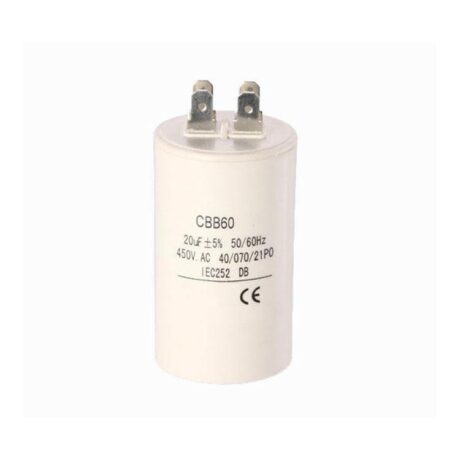
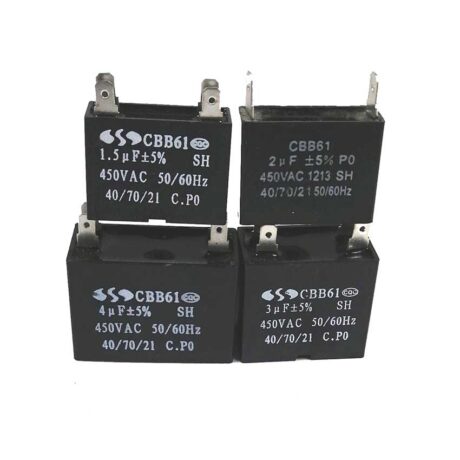
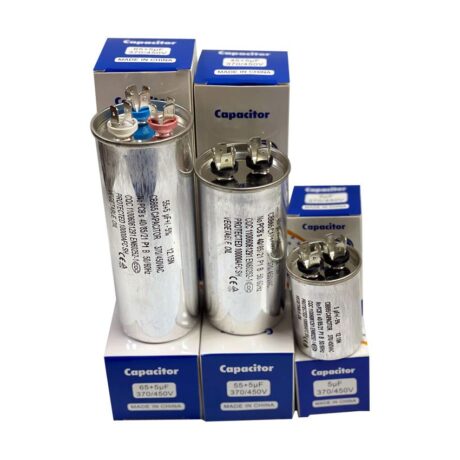
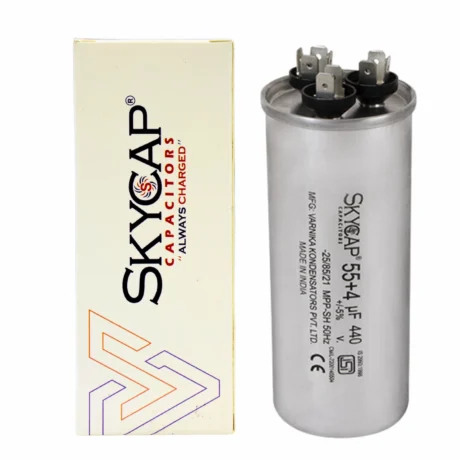
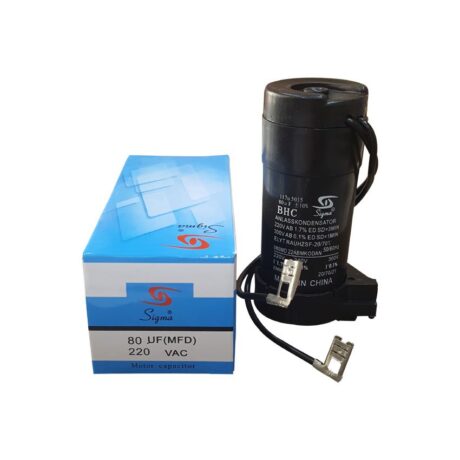
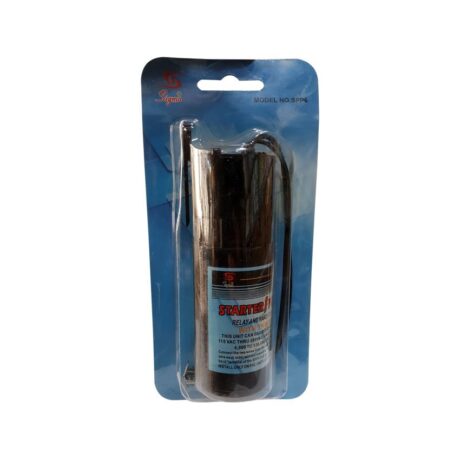
High-Grade AC Capacitors: Leading Supplier in UAE for Compressor and Fan Motor Reliability – Al Waleed A/C Spare Parts
In the UAE, where sustained, maximum-capacity cooling is non-negotiable, the reliability of a central air conditioning unit hinges significantly on the performance of its capacitors. An AC capacitor is a critical electro-mechanical component that acts as a temporary energy reservoir, providing the instantaneous, high-current “jolt” required to initiate the rotation of the AC compressor and fan motors. Given the constant cycling and immense thermal stress inherent in Dubai’s extreme climate, capacitor failure is one of the most common causes of HVAC breakdown. Al Waleed A/C Spare Parts Dubai supplies only high-quality, certified dual-run and single-run capacitors, engineered for thermal resilience and longevity across residential and commercial split AC, packaged, and central chiller systems.
What is an HVAC Capacitor and Why is it Essential?
A capacitor is essentially two metal conductors separated by a dielectric insulator, designed to store electrical charge. In an AC unit, capacitors perform two main functions:
-
Start Capacitor: Provides the high initial torque required to overcome the inertia and compression load when starting the AC compressor and/or fan motor. This powerful surge (often referred to as the “electrical jumpstart”) is far greater than the steady run current available from the main power line.
-
Run Capacitor (Capacitors Function): Maintains an optimal phase difference between the current in the start winding and the main winding of the motor during continuous operation. This maintains maximum operating efficiency and keeps the motor windings cool.
Failure of the capacitor directly impacts the AC compressor, which is the heart of the system. Without the necessary electrical assistance, the compressor motor will fail to start (or attempt to start and overload), leading to immediate cooling system shutdown or inefficient operation.
Technical Applications and Capacitor Types
In HVAC systems, capacitors are typically categorized by their application:
-
Dual Run Capacitors: Common in split AC units, these are a single cylindrical component with three terminals (Herm/Compressor, Fan, Common). They serve both the compressor and the condenser fan motor, simplifying wiring and unit design.
-
Single Run Capacitors: Used for systems where the fan motor or compressor have separate requirements, or in units with multiple dedicated motors.
-
Start Capacitors: Used only for the initial start-up torque; they are high-capacitance components designed for short-duration use and are typically paired with a potential relay to disconnect them once the motor reaches speed.
Technical Considerations for the UAE Climate:
The extreme outside temperatures in the UAE directly subject the capacitor (located in the outdoor unit) to high heat. This thermal stress degrades the internal dielectric material over time, reducing its ability to hold charge. Therefore, choosing capacitors with higher temperature ratings and robust construction is vital for maximizing the lifespan of the capacitor in air conditioner units installed locally.
Symptoms of a Bad AC Capacitor and Testing
A failing AC capacitor presents distinct, system-critical symptoms that technicians must diagnose swiftly, especially during the peak summer cooling season:
-
Humming Noise: The ac compressor or fan motor attempts to start but cannot overcome the inertia, resulting in a loud, prolonged humming sound as the windings draw locked-rotor current.
-
Slow Start-Up or Random Shut-Off: The system struggles to start or, due to reduced capacitance, the motor operates inefficiently, heats up, and triggers the thermal overload protector.
-
No Cold Air/No Operation: The definitive sign is when the AC system doesn’t turn on at all, or the indoor unit is running but the outdoor unit is completely inactive.
Capacitor Testing: Technicians use a multimeter capable of measuring capacitance (in Microfarads – uF). The tool charges the capacitor and measures the resulting voltage to determine its actual capacitance. Any reading below the printed nominal value by more than 5% indicates the capacitor is failing and must be replaced to prevent damage to the connected motors.
AC Capacitor Price in UAE and Supply
The split AC capacitors price and central AC capacitors price in Dubai varies based on the Microfarad (uF) rating, Voltage rating (typically 370V or 440V AC), and physical size. Given the critical function of the capacitor, technicians seeking an AC capacitor shop near me prioritize certified quality and genuine electrical specifications over low cost.
Al Waleed A/C Spare Parts provides a comprehensive AC capacitor size chart and inventory, ensuring quick availability of exact match replacements for all major residential and commercial HVAC brands operating in the Emirates.
Why Choose Al Waleed A/C Spare Parts Dubai?
As the trusted supplier of HVAC components, Al Waleed A/C Spare Parts Dubai is focused on providing capacitors built to withstand the demanding load cycles and high ambient heat of the region. Our products feature high-grade dielectric oil and durable aluminum casing, promoting a longer life expectancy than standard capacitors. We offer reliable supply chain speed, guaranteeing that technicians and maintenance contractors can secure the exact capacitor for ac unit replacement quickly, minimizing customer downtime and reducing the risk of a simple capacitor failure escalating into an expensive ac compressor replacement.
Technical FAQ for AC Capacitors
Q: What is the normal life expectancy of an AC capacitor in the UAE?
A: While high-quality capacitors are rated for up to 20 years in ideal conditions, the extreme temperature and constant operation cycles in the UAE significantly reduce this. In practice, a typical lifespan in Dubai’s climate is often between 5 to 10 years, making regular testing a necessary part of preventative maintenance.
Q: Can I use an AC capacitor with a higher voltage rating than my system requires?
A: Yes, you can use a capacitor with a higher voltage rating (e.g., a 440V unit replacing a 370V unit), provided the Microfarad (uF) rating is an exact match. The higher voltage rating simply means it can handle higher voltage spikes without failing. Never use a capacitor with a lower voltage rating.
Q: Why does the AC fan motor sometimes run, but the compressor ac does not start?
A: This is the classic symptom of a failed or weak compressor run capacitor (the Herm terminal on a dual run capacitor). The fan motor capacitor may still be functional, allowing the fan to spin, but the compressor cannot get the electrical jolt needed to overcome its starting load.
Q: What is capacitance, and how is it measured on an AC capacitor?
A: Capacitance is the capacity of the capacitor to store an electrical charge, and it is measured in Microfarads (uF). It is tested using a specialized multimeter by placing probes on the common and motor terminals and comparing the measured uF value against the printed nominal value.
Q: Can a power surge damage a capacitor?
A: Yes, power surges and lightning strikes are primary causes of premature capacitor failure. An over-voltage condition can overwhelm the dielectric material, causing internal shorts or an explosive failure, hence why a higher voltage rated capacitor offers better protection.
Q: What is the maximum deviation allowed when replacing an AC capacitor?
A: When replacing a capacitor, the Microfarad (uF) rating must match exactly. A maximum tolerance of +-5% of the nominal uF value is generally accepted. Deviation outside this range can lead to motor overheating (too high uF) or low starting torque/overheating windings (too low uF).
Q: What is the purpose of the three terminals on a dual run capacitor?
A: The three terminals are labeled C (Common, connects to main power), HERM (Hermetic, connects to the compressor), and FAN (connects to the condenser fan motor). This single component services two motors simultaneously.
Q: Do you supply car AC compressor capacitors?
A: While our primary focus is on residential and commercial building HVAC systems, we do stock a variety of general-purpose electrical capacitors that can be used in various applications, including some car AC compressor or automotive cooling systems, depending on the required specifications.
Q: What is the correct way to safely discharge a capacitor before testing?
A: Before touching or testing, a capacitor must be safely discharged using a resistor tool or insulated screwdriver with an approved insulated handle. Touching the terminals without discharging the stored electricity can result in a severe, potentially dangerous shock, which is critical safety training for any HVAC technician.
Q: What is the typical life expectancy of a compressor for ac compared to the capacitor?
A: A properly maintained ac compressor can last 10 to 15 years or more. However, the capacitor’s life is significantly shorter (5 to 10 years). A failing capacitor can starve or stress the compressor motor, leading to its premature failure, which is why capacitor replacement is a cheap insurance policy for the expensive compressor.