
Showing all 5 results
Leading Strategic Supplier of HVAC Compressor Oil and Refrigeration Lubricants in UAE
The continuous, high-load operation of air conditioning and refrigeration systems in the UAE’s demanding climate places immense stress on the compressor—the heart of the cooling circuit. HVAC Compressor Oil is not merely a lubricant; it is a critical thermal and chemical agent that seals the compressor’s piston, transfers heat away from the motor windings, and must remain chemically stable under extreme temperatures and pressures. Using the wrong base oil or viscosity grade (ISO VG) is the number one cause of catastrophic compressor failure in the region.
Al Waleed A/C Spare Parts Dubai is the Leading Strategic Supplier of high-performance Refrigeration Lubricants, offering a comprehensive range of synthetic and traditional oils to meet every technical requirement in the commercial and residential HVAC/R sectors. Our inventory ensures technicians can procure the exact R134a compatible oil (Synthetic, likely POE) or the specialized Mineral/AB oil needed for legacy R22 systems, guaranteeing component longevity and system efficiency.
Technical Lubricant Selection and Compatibility
The essential factor in selecting the correct oil is its chemical compatibility with the refrigerant, which dictates the base oil type, and its viscosity grade, which determines the load-bearing capacity and sealing ability.
| Product Series | Base Oil Type | Viscosity Grade (ISO VG) | Refrigerant Compatibility | Key Technical Insight |
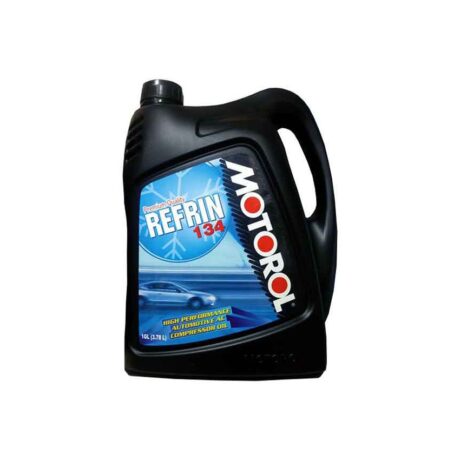
| REFRIN 134A | Synthetic (Likely POE) | 46 | R134a, R404A, R410A (Requires HFC compatibility) | Non-hygroscopic properties are critical. Superior film strength at high discharge temperatures. |
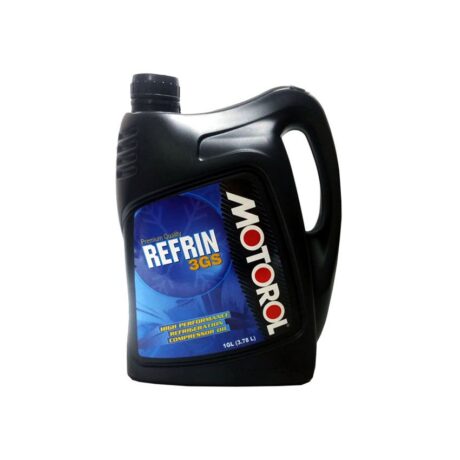
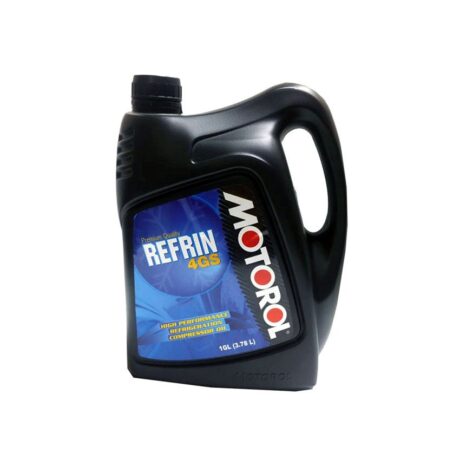
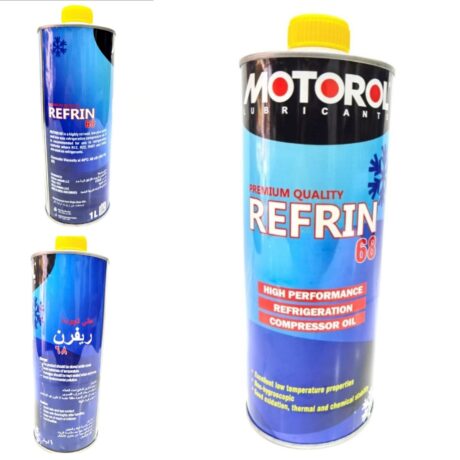
| REFRIN 3GS/4GS/68 | High Performance Mineral/AB | 32, 46, 68 | R22, R12, Ammonia, R502 (Traditional refrigerants) | Wax-free with excellent low-temperature flow properties; thermally and chemically stable with HCFCs/CFCs. |
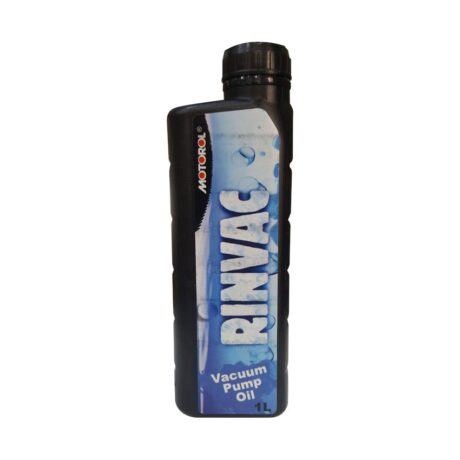
| Vacuum Pump Oil | High-Quality White Oil | Low Viscosity (Unspecified) | Maintenance Equipment | Low volatility and high demulsibility for rapid water separation in humid environments. |
Synthetic vs. Mineral Oil: The Chemical Mandate
The incompatibility between oil and refrigerant is a major service pitfall.
-
Synthetic Oil (POE/PAG): Required for modern HFC refrigerants like R134a, R404A, and R410A. These oils are highly hygroscopic (absorb moisture easily), making proper system evacuation and sealed handling absolutely mandatory in the high humidity of the UAE.
-
Mineral/AB Oil: Only compatible with traditional refrigerants like R22, R12, and Ammonia. Using mineral oil in an R134a or R410A system will cause the oil to fail to circulate, leading to instant lubrication starvation and catastrophic compressor damage.
Viscosity Grades and Climate Performance
The ISO Viscosity Grade (VG) indicates the oil’s thickness at a standardized temperature (40 degrees C) and must match the compressor manufacturer’s specification.
-
ISO VG 32 (Refrin 3GS): Lighter oil, often used in chillers or rotary/scroll compressors where faster oil return is prioritized.
-
ISO VG 46 (Refrin 134A / 4GS): The most common standard viscosity for general commercial and residential reciprocating compressors across both R22 (4GS) and R134a (134A) applications.
-
ISO VG 68 (Refrin 68): Heavier oil, typically used in larger, older, or high-temperature commercial piston compressors requiring a thicker film for sealing and load bearing.
In the UAE, where discharge temperatures can soar, maintaining the correct viscosity is essential to prevent oil breakdown and ensure the required film strength to protect pistons and bearings.
HVAC Compressor Oil Price and Sourcing
Reliable sourcing of certified lubricants is a non-negotiable for maintenance professionals managing critical assets.
Al Waleed A/C Spare Parts Dubai offers competitive HVAC compressor oil price Dubai wholesale, stocking all common ISO VG grades in convenient 1-Liter and 1-Gallon containers for both field service and workshop use. We supply only high-quality lubricants tested for thermal and chemical stability, reducing the risk of sludge, waxing, and carbon deposits that are detrimental to compressor lifespan in high-heat environments.
Why Choose Al Waleed A/C Spare Parts Dubai?
We eliminate the guesswork in lubricant selection, ensuring the right oil for the right system.
-
Guaranteed Compatibility: We clearly categorize and stock the mandatory Synthetic POE/PAG oils for R134a/R410A and separate Mineral/AB oils for R22, preventing system-destroying chemical incompatibility.
-
Viscosity Range Availability: Full inventory of ISO VG 32, 46, and 68 ensures technicians can accurately match OEM specifications for all brands of commercial and residential compressors.
-
Specialized Maintenance Stock: We supply essential High Vacuum Pump Oil, a low-volatility oil crucial for maintaining the performance and longevity of high-vacuum pumps used for system evacuation in the humid UAE climate.
-
Bulk and Urgent Supply: We provide rapid delivery of lubricants in bulk quantities, supporting large facility maintenance contracts that require continuous supply during peak cooling seasons.
Technical FAQ for Refrigeration and HVAC Lubricants
Q: Why is it forbidden to use Mineral Oil (Refrin 4GS) in a system designed for R134a (Refrin 134A)?
A: R134a, being an HFC, is not miscible (does not mix) with Mineral Oil. The mineral oil would not travel through the refrigerant lines and would instead pool in the evaporator, leading to lubrication starvation in the compressor and causing it to seize almost immediately.
Q: What does the term “ISO VG 46” mean, and why is it important?
A: ISO VG 46 is the International Organization for Standardization Viscosity Grade. The number 46 indicates that the oil has a nominal kinematic viscosity of 46 centistokes at a standardized temperature of 40 degrees C. This grade is vital because it determines the oil’s ability to seal the compressor and bear the mechanical load.
Q: Why is Synthetic POE oil often called “hygroscopic,” and what precaution must be taken in the UAE?
A: POE oil is hygroscopic, meaning it strongly attracts and absorbs atmospheric moisture. In the humid UAE, technicians must take extreme care: the oil container must be kept tightly sealed, and the system must be evacuated to a deep vacuum (below 500 microns) immediately before charging to remove all traces of moisture.
Q: Can I use standard motor oil as a substitute for Vacuum Pump Oil?
A: No, absolutely not. Standard motor oils contain volatile additives and do not possess the necessary low volatility or high chemical stability required for vacuum pump operation. Using the wrong oil will contaminate the vacuum pump and prevent it from pulling the necessary deep vacuum, ruining the system’s moisture removal process.
Q: What is the risk of using too heavy a viscosity grade (e.g., ISO VG 68) in a compressor designed for ISO VG 32?
A: A viscosity that is too heavy will create excessive friction and drag on the moving parts, leading to increased motor current, higher operating temperatures, reduced efficiency, and potentially overheating the motor windings.
Q: Why is a low wax-free rating essential for R22/R12 Mineral Oils (3GS/4GS)?
A: A wax-free rating means the oil will not precipitate wax crystals at the low temperatures found in the evaporator. Wax crystals can travel through the system, blocking small passages like capillary tubes or expansion valves, leading to system failure.
Q: What is the solidus temperature of a typical high-performance refrigeration oil?
A: Refrigeration oils do not have a sharp solidus temperature like brazing alloys; instead, they have a pour point. High-performance mineral oils typically have a very low pour point (e.g., -40 degrees C or lower) to ensure they remain fluid and return to the compressor even in the coldest parts of the evaporator.
Q: How do I identify if the wrong oil was used in a failed compressor?
A: Signs of wrong oil use include sludge formation, excessive varnish or carbon deposits on the discharge valve plate, or a clear lack of oil in the compressor sump combined with a high concentration of oil residue in the evaporator coil.
Q: What does “Demulsibility” refer to in the context of Vacuum Pump Oil?
A: Demulsibility is the oil’s ability to rapidly and completely separate from water. This is critical for vacuum pump oil, as moisture pulled out of the HVAC system must not emulsify (mix) with the oil, which would ruin the oil’s lubricating properties.
Q: Can REFRIN 134A oil be used in a system that originally ran R410A?
A: Yes, if the ISO VG 46 viscosity matches the R410A compressor’s specification, and if the oil is confirmed to be a compatible POE (Polyolester) formulation. R410A also requires POE oil, making the switch viable as long as the viscosity is correct.