
Showing all 2 results
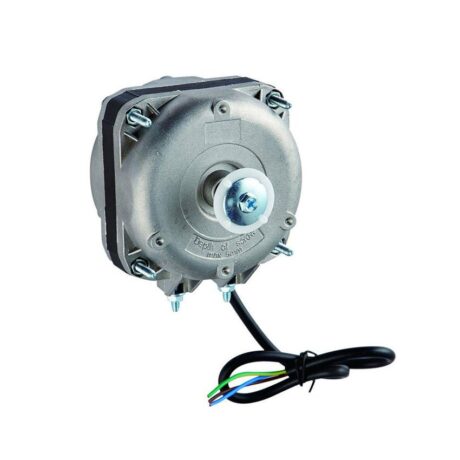
High-Performance Condenser Fan Motors: Leading Supplier Al Waleed A/C Spare Parts
The condenser fan motor is a mission-critical component within any Vapor Compression Refrigeration (VCR) cycle, acting as the primary mechanism for heat rejection in the HVAC system. In the harsh, high-ambient temperature environment of the UAE, particularly Dubai, the sustained and efficient operation of this motor is not merely a matter of comfort but an absolute necessity for system longevity and energy efficiency. A failing condenser fan motor directly compromises the subcooling process, leading to elevated head pressure, higher discharge temperatures, and ultimately, a stressed or failing compressor—the most costly component to replace. Al Waleed A/C Spare Parts Dubai supplies the robust and high-torque AC condenser fan motors required to meet the continuous, heavy-duty cooling demand across residential, commercial, and industrial applications in the Emirates.
Core Function and Technical Operation of AC Condenser Fan Motors
The fundamental purpose of the condenser fan motor is to drive the fan blades, drawing ambient air across the condenser coil. This forced convection process is essential because it facilitates the removal of heat from the high-temperature, high-pressure superheated refrigerant vapor, allowing it to condense back into a high-pressure liquid. This phase change is crucial for the refrigerant to absorb heat effectively later in the evaporator coil (indoor unit).
Working Principle in UAE Context:
In Dubai’s extreme summer conditions, outdoor ambient temperatures can exceed 45 degrees C. A typical fan motor must consistently deliver adequate airflow (measured in CFM – Cubic Feet per Minute) against the significant heat load to maintain the necessary temperature differential (Delta T) for efficient heat transfer. Any degradation in motor speed or torque—often due to worn bearings, winding failures from constant thermal stress, or failing capacitors—directly results in insufficient heat rejection, leading to a rise in system pressure and an immediate drop in cooling capacity (BTU/h output).
Permanent Split Capacitor (PSC) Condenser Fan Motors
Permanent Split Capacitor (PSC) motors are widely used in the UAE HVAC market for their reliability, high starting torque, and cost-effectiveness. The inclusion of a run capacitor, permanently wired into the auxiliary winding, is the defining feature of a PSC motor. This design creates a phase shift between the current in the start winding and the main winding, generating the elliptical rotating magnetic field needed for continuous operation.
Key Technical Benefits in High-Heat Applications:
-
High Starting Torque: Essential for overcoming the initial inertia of the fan blade assembly, especially in direct-drive applications.
-
Thermal Stability: Compared to less efficient shaded-pole motors, PSC motors run cooler and offer better thermal tolerance, which is vital given the motor’s placement in the outdoor condenser unit exposed to both solar radiation and high ambient air.
-
Energy Efficiency: While Electronically Commutated Motors (ECMs) offer superior variable-speed efficiency, PSC motors provide a significantly better energy-to-output ratio than older technologies, helping to manage the high electricity consumption typical of AC operation in the UAE.
Applications Across the UAE Market
The quality and specification of the condenser fan motor must be matched precisely to the HVAC unit’s required airflow and static pressure. Our inventory covers the full spectrum of UAE cooling needs:
-
Residential HVAC Systems: Split AC units, packaged units, and ducted systems in villas and apartments across Dubai, Abu Dhabi, and the Northern Emirates.
-
Commercial Applications: Condensing units for light commercial AC, high-capacity rooftop packaged units, and cooling towers for large-scale buildings and shopping centers.
-
Industrial & Refrigeration: Motors for cold storage walk-in coolers, display cases in supermarkets, vending machines, and various process cooling systems that operate year-round under continuous load.
Technical Selection Insights for UAE HVAC Technicians
Selecting the correct AC fan motor replacement requires meticulous attention to detail to ensure optimal system performance and prevent premature failure.
-
Motor Specifications: Always match the original motor’s Horsepower (HP), Revolutions Per Minute (RPM – typically 1075 RPM or 825 RPM), Voltage (220V/240V, 380V/415V), and Frequency (50Hz standard in UAE). Never decrease the HP rating.
-
Capacitor Rating: The replacement motor must be paired with a new run capacitor of the exact Microfarad (uF) rating specified for the motor. A failing capacitor is the most common cause of motor burnout.
-
Rotation (CCW/CW): Verify the motor’s rotation direction (Clockwise – CW or Counter-Clockwise – CCW) relative to the shaft end (SE) to ensure proper airflow for heat rejection. Incorrect rotation will recirculate hot air, causing immediate system shutdown due to high pressure.
-
Ambient Temperature Rating: Due to the extreme heat, technicians should favor motors with a higher ambient temperature rating where possible, which are designed to withstand the heat generated internally plus the external environmental heat load.
Condenser Fan Motor Price in UAE and Where to Buy
The AC condenser fan motor price in Dubai varies based on the motor’s HP, speed (single-speed vs. multi-speed), bearing type (sleeve vs. ball bearing for durability), and efficiency class (PSC vs. ECM). Commercial-grade motors for larger units naturally command a higher price point than residential window AC fan motors.
For HVAC service companies, maintenance contractors, and facility managers seeking the best value—a combination of competitive AC fan motor price in UAE and uncompromised quality—sourcing directly from a trusted and authoritative local stockist is key.
Why Choose Al Waleed A/C Spare Parts Dubai?
As a leading supplier of AC spare parts in the UAE, Al Waleed A/C Spare Parts Dubai has built its reputation on stocking components specifically engineered for the relentless demands of the Gulf climate. We understand the urgency of AC breakdown in the summer months, and our commitment to fast, reliable delivery ensures technicians have the right part when they need it most. Our motors are sourced from reputable manufacturers, guaranteeing they meet the performance standards necessary to protect your compressor and maximize system efficiency, providing genuine quality and peace of mind for every installation.
Technical FAQ for Condenser Fan Motors in the UAE
Q: What is the primary cause of condenser fan motor failure in Dubai’s climate?
A: The primary cause is prolonged exposure to extremely high ambient temperatures, leading to excessive thermal stress on the motor windings and premature degradation of the motor’s bearings and the run capacitor. Dust and sand accumulation also contribute by clogging the unit, restricting airflow, and forcing the motor to work harder and run hotter.
Q: What are the signs that my AC fan motor needs to be replaced?
A: Common signs include the outdoor fan not spinning, a loud humming or buzzing sound from the unit while the compressor is running, the fan spinning slowly, or the fan running intermittently before shutting off (often due to thermal overload). A tripped circuit breaker specifically for the AC unit can also indicate a short or severe overload.
Q: How do I check the capacitor when troubleshooting a condenser fan motor?
A: Power must be disconnected and the capacitor safely discharged first. A multimeter set to read capacitance (uF) is then used to measure the microfarad rating across the terminals. The reading should be within +-5% of the value printed on the capacitor label (e.g., a 40 uF capacitor should read between 38 uF and 42 uF).
Q: Can I use a condenser fan motor with a different RPM or HP rating?
A: It is strongly recommended to use an exact match for RPM and HP. Using a lower HP will result in insufficient airflow and motor burnout. Using a significantly higher HP can also cause issues with system balance, potentially overloading the new motor if the unit’s static pressure is too low, and is an unnecessary expense. For PSC motors, RPM must be exact to ensure correct airflow velocity.
Q: What is the difference between a PSC motor and an ECM motor?
A: A PSC (Permanent Split Capacitor) motor is a fixed-speed, fixed-torque motor, known for its ruggedness. An ECM (Electronically Commutated Motor) is a high-efficiency brushless DC motor that can vary its speed and torque based on system demand, offering significant energy savings and superior comfort control, particularly at partial load.
Q: Why is correct fan blade pitch and alignment crucial after motor replacement?
A: Correct fan blade pitch and alignment are crucial to ensure the motor pulls or pushes the exact volume of air (CFM) across the coil as designed by the AC manufacturer. Improper pitch can reduce airflow, increase system pressure, or cause excessive vibration, leading to rapid bearing wear and motor failure.
Q: Does Al Waleed A/C Spare Parts offer motors for both single-phase and three-phase commercial units?
A: Yes, we stock a comprehensive range of condenser fan motors for both single-phase (220V/240V) residential and light commercial units, as well as three-phase (380V/415V) motors required for large commercial and industrial HVAC systems and air-cooled chillers common in the UAE.
Q: Should I replace the capacitor every time I replace the condenser fan motor?
A: Yes, it is considered best practice by professional HVAC technicians to replace the capacitor along with the motor. The capacitor is a relatively low-cost component, and a new capacitor ensures the new motor receives the correct starting and running current, maximizing its lifespan and efficiency.
Q: What is the role of the thermal overload protector in a condenser fan motor?
A: The thermal overload protector (internal or external) is a crucial safety feature. When the motor’s internal temperature exceeds a safe limit, typically due to excessive load, restricted airflow, or low voltage, the protector temporarily shuts off power to prevent the motor windings from burning out, thereby safeguarding the component from catastrophic failure.
Q: Can dirt and sand buildup on the condenser coil affect the fan motor?
A: Absolutely. Sand and dust buildup on the condenser coil acts as an insulating layer, trapping heat and significantly reducing the coil’s ability to reject it. This causes the refrigerant head pressure to rise dramatically. The motor, having to run longer and harder in this high-heat, high-pressure environment, experiences increased electrical and thermal stress, accelerating its wear.